Why missions matter more than ever
Earth's atmosphere blurs starlight and blocks most infrared, ultraviolet and X-ray radiation. Putting instruments in space, or sending them to other worlds, removed that filter. The results came in waves: first planetary close-ups in the 1960s and 70s, then the great observatories of the 1990s, and now a generation of infrared and precision-mapping telescopes.
Below is our mission log, in launch order. Each entry notes what the mission confirmed and, where relevant, which question it opened.
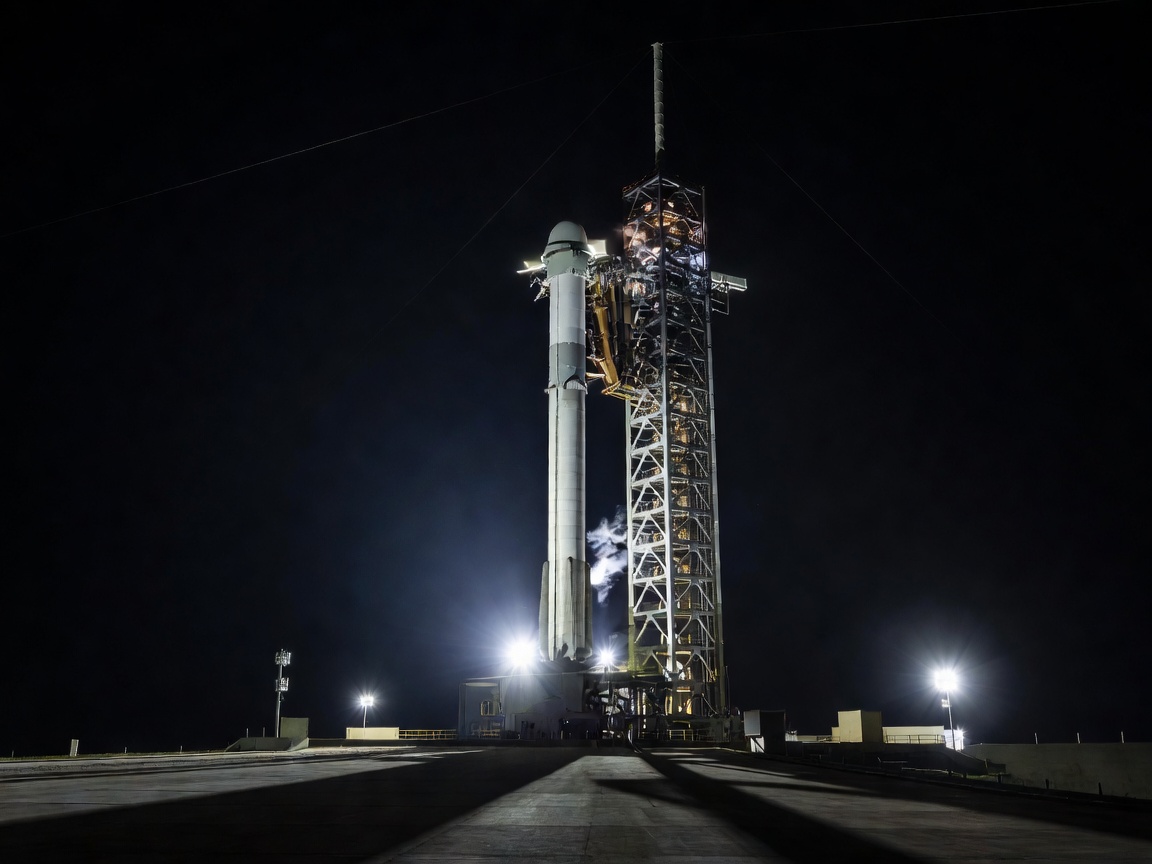
Mission timeline
- 1977 · Voyager 1 and 2Launched 20 August (Voyager 2) and 5 September (Voyager 1). Together they visited Jupiter, Saturn, Uranus and Neptune, discovering active volcanoes on Io. Voyager 1 crossed the heliopause into interstellar space in August 2012; Voyager 2 followed in November 2018. Each carries a Golden Record of sounds and images from Earth, curated by a committee chaired by Carl Sagan.
- 1990 · Hubble Space TelescopeDeployed from Space Shuttle Discovery in April. A flawed mirror was corrected by astronauts in December 1993. Hubble helped pin down the age of the universe and contributed to the 1998 discovery that cosmic expansion is accelerating.
- 1990 · Pale Blue DotOn 14 February, at Sagan's urging, Voyager 1 turned its camera back and photographed Earth from about 6 billion kilometres as a single pixel in a sunbeam.
- 1997 · Cassini–HuygensLaunched in October and arrived at Saturn in 2004. Huygens landed on Titan in January 2005. Cassini found the Enceladus plumes and ended its mission by diving into Saturn on 15 September 2017.
- 2006 · New HorizonsLaunched in January and flew past Pluto on 14 July 2015, then Arrokoth on 1 January 2019.
- 2009 · Kepler and PlanckKepler watched about 150,000 stars for tiny dips in brightness and found thousands of exoplanets. Planck mapped the cosmic microwave background.
- 2013 · GaiaESA's star-mapper measured positions and motions of nearly two billion stars before it was retired in March 2025, producing the most detailed map of the Milky Way ever made.
- 2020 · PerseveranceLaunched in July and landed in Jezero Crater on 18 February 2021, with the Ingenuity helicopter, which made the first powered flight on another planet.
- 2021 · James Webb Space TelescopeLaunched 25 December on an Ariane 5 from Kourou. It orbits the Sun–Earth L2 point, about 1.5 million kilometres away, with a 6.5-metre gold-coated mirror.
- 2024 · Europa ClipperLaunched 14 October, due at Jupiter in 2030 to study whether Europa's ocean could support life.
Mission cards
Voyager's long goodbye
Powered by radioisotope generators, the Voyagers lose a little energy every year. Engineers switch off instruments one by one to stretch their lives. Signals now take over 22 hours to reach Earth from Voyager 1.
Hubble and Webb
Hubble sees ultraviolet and visible light from low Earth orbit. Webb works in the infrared from deep space. Together they cover different chapters of the same cosmic history.
Vera C. Rubin Observatory
From Cerro Pachón in Chile, this ground-based observatory will survey the entire southern sky repeatedly for ten years, catching anything that moves or changes.
What the missions taught us about asking
A pattern runs through this log. Missions are designed to answer specific questions, then return their biggest results somewhere unexpected. Cassini was not built to find an ocean on Enceladus. JWST's planners expected early galaxies but not quite so many bright ones. Kepler showed that planets are common, then left us wondering why our own solar system looks so unusual among them.
That is why we treat missions as the spine of this bulletin. They are how confirmed facts enter the log, and how new open questions are born. For those open questions, turn the page to Mysteries.